Careers at Arise – View our open positions
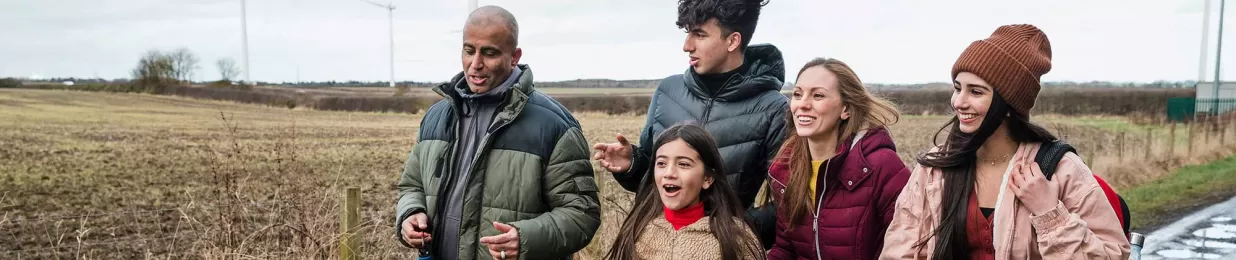
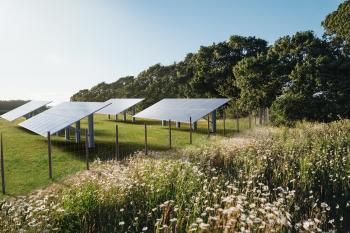
Solar PV and BESS is a peaceful neighbour. Often barely visible behind hedgerows, when operational, solar farmed land quickly becomes part of the local fabric. Alongside bringing income directly to a local farming family, wider communities benefit financially via community managed funds which can be used for a variety of purposes, such as issues relating to affordable housing, energy consumption & affordability, in addition to recreation, tourism and ecology, education and supporting local entrepreneurship.
Allowing land to take a ‘rest’ from arable use or livestock gives unique opportunity for flora and fauna to return and establish. ‘Biodiversity Net Gain’ is a strong feature of renewable energy development that aims to leave the natural environment in a measurably better state than it was beforehand. During planning, surveys are taken of the local bird, reptile and wildlife, species and quantities noted. Wildlife enhancement schemes are designed into our projects and the little disturbed nature of a solar farm can transform sites into a local ecological haven*
Whilst wind projects can bring visible change to a skyline, Arise works with experienced landscape and visual impact architects to ensure that turbines are sited sympathetically to local surroundings. This often involves re-siting, or even removing turbines from final planning applications.
Arise seeks to engage constructively with local communities who host our renewable energy developments to ensure that we can address concerns. In our experience, local businesses benefit during the construction and operation of our projects including accommodation providers, trade contractors, hospitality and materials suppliers.
We have prepared some answers to frequently asked questions from local communities below.
Arise is a developer of renewable energy projects. We find suitable locations, apply to connect them into the electricity network, survey sites to assess their suitability from a planning perspective, engage the local community, submit the planning application, finance the build, advise through the construction, often we also operate / maintain the site and sell the generated electricity. Our UK based team have broad backgrounds and are experienced in farming, engineering, planning, CAD design and high voltage electrical networks.
The company also has country focused businesses in Finland, Norway and Sweden where it is both headquartered and listed on the NASDAQ within the Stockholm Stock Exchange.
Arise’s mission is to sustainably create clean electricity, bringing positive change for our planet, fostering environmental stewardship and empowering local communities.
Britain’s demand for electricity is expected to double over the next 25 years due to increasing electrification of our economy and through our work we are supporting the energy transition in the UK.
From an individual perspective, dedicating your working life to creating renewable energy attracts a certain kind of person. Our team are passionate about fighting climate change and are concerned about its detrimental impact on planet Earth, on species, habitats, Britain’s countryside and our own children’s future.
The deployment of renewable energy projects is free from many of the damaging problems inherent in coal, oil, gas or nuclear power production.
Further, it has none of the major drawbacks inherent in other forms of electricity: no geopolitical risks, no foreign energy dependence, no fuel risk, no exploration, no refineries, no pipelines, no depletion of raw materials no radioactive waste, and virtually no carbon emissions.
Lastly, the energy generated is local. Wind resource is abundant across the UK and the price of solar PV has dropped so much that projects are viable without Government support. If we compare this to the cost of the oil and gas that we burn to produce electricity, these are all imported from other countries, and the availability and therefore pricing fluctuates. The more we use wind to power our homes and businesses, the less we are reliant on importing expensive fossil fuels, and the closer we are to having the security of our energy.
Of course. During the development process, each project holds exhibitions generally within local community halls where you can meet the team, read about the plans, share your local knowledge that we may not be aware of and give your feedback.
The local council planning process permits local all voices to be heard as context for the plans submitted. As plans are drafted, Arise will publish a project specific website for each project too, offering the chance to share your feedback with us.
For solar farming on flat ground, you are not likely to see much as the panels disappear easily behind hedgerows and the panels are silent. Wind turbines are sited away from houses to minimise risk of disturbance.
Solar or wind projects have associated electrical equipment some of which has ventilation type cooling fans. Noise levels at 1m distant for inverters or battery systems are compared with the existing ambient noise of a location so that siting is chosen carefully. Battery systems are better located near existing agricultural buildings if possible whereas inverters need to be placed close to the turbines or solar panels.
Creating electricity cheaply and carbon free benefits everyone except the businesses generating it at a higher price in a more polluting way. More directly, you can benefit from engaging in the financial contribution that the project is able to pay into its neighbouring community. These funds can be quite significant bringing new life and opportunities to a small town or village.
Solar farming demonstrably allows nature to return to piece of land, so you’ll hear more birdsong and see more wildlife. Wind turbines require construction tracks which may present opportunity to access land for cycling, running & leisure.
There is a lot of behind the scenes planning work in creating an energy project. Many of the wildlife & other surveys are seasonal, extending the timescales. Planning for solar farming takes around 18 months and for wind turbines, four years or so depending on the location. In England & Scotland, most solar applications are decided upon by the Local Authority, with larger ones and most wind projects being decided within devolved Government. In Wales, most solar or wind projects are decided by devolved Government.